


At a glance:
- Study shows for the first time that lithium plays an essential role in normal brain function and can confer resistance to brain aging and Alzheimer’s disease.
- Scientists discovered that lithium is depleted in the brain by binding to toxic amyloid plaques — revealing a new way Alzheimer’s may begin.
- A new class of lithium-based compounds avoids plaque binding and reverses Alzheimer’s and brain aging in mice, without toxicity.
What is the earliest spark that ignites the memory-robbing march of Alzheimer’s disease? Why do some people with Alzheimer’s-like changes in the brain never go on to develop dementia? These questions have bedeviled neuroscientists for decades.
Now, a team of researchers at Harvard Medical School may have found an answer: lithium deficiency in the brain.
The work, published in Nature, shows for the first time that lithium occurs naturally in the brain, shields it from neurodegeneration, and maintains the normal function of all major brain cell types. The findings — 10 years in the making — are based on a series of experiments in mice and on analyses of human brain tissue and blood samples from individuals in various stages of cognitive health.
The scientists found that lithium loss in the human brain is one of the earliest changes leading to Alzheimer’s, while in mice, similar lithium depletion accelerated brain pathology and memory decline. The team further found that reduced lithium levels stemmed from binding to amyloid plaques and impaired uptake in the brain. In a final set of experiments, the team found that a novel lithium compound that avoids capture by amyloid plaques restored memory in mice.
The results unify decades-long observations in patients, providing a new theory of the disease and a new strategy for early diagnosis, prevention, and treatment.
Affecting somewhere between 50 million and 400 million people worldwide, Alzheimer’s disease involves an array of brain abnormalities — such as clumps of the protein amyloid beta, neurofibrillary tangles of the protein tau, and loss of a protective protein called REST — but these never explained the full story of the disease. For instance, some people with such abnormalities show no signs of cognitive decline. And recently developed treatments that target amyloid beta typically don’t reverse memory loss and only modestly reduce the rate of decline.
It’s also clear that genetic and environmental factors affect risk of Alzheimer’s, but scientists haven’t figured out why some people with the same risk factors develop the disease while others don’t.
Lithium, the study authors said, may be a critical missing link.
“The idea that lithium deficiency could be a cause of Alzheimer’s disease is new and suggests a different therapeutic approach,” said senior author Bruce Yankner, professor of genetics and neurology in the Blavatnik Institute at HMS, who in the 1990s was the first to demonstrate that amyloid beta is toxic.
The study raises hopes that researchers could one day use lithium to treat the disease in its entirety rather than focusing on a single facet such as amyloid beta or tau, he said.
One of the main discoveries in the study is that as amyloid beta begins to form deposits in the early stages of dementia in both humans and mouse models, it binds to lithium, reducing lithium’s function in the brain. The lower lithium levels affect all major brain cell types and, in mice, give rise to changes recapitulating Alzheimer’s disease, including memory loss.
The authors identified a class of lithium compounds that can evade capture by amyloid beta. Treating mice with the most potent amyloid-evading compound, called lithium orotate, reversed Alzheimer’s disease pathology, prevented brain cell damage, and restored memory.
Although the findings need to be confirmed in humans through clinical trials, they suggest that measuring lithium levels could help screen for early Alzheimer’s. Moreover, the findings point to the importance of testing amyloid-evading lithium compounds for treatment or prevention.
Other lithium compounds are already used to treat bipolar disorder and major depressive disorder, but they are given at much higher concentrations that can be toxic, especially to older people. Yankner’s team found that lithium orotate is effective at one-thousandth that dose — enough to mimic the natural level of lithium in the brain. Mice treated for nearly their entire adult lives showed no evidence of toxicity.
“You have to be careful about extrapolating from mouse models, and you never know until you try it in a controlled human clinical trial,” Yankner said. “But so far the results are very encouraging.”
Lithium depletion is an early sign of Alzheimer’s
Yankner became interested in lithium while using it to study the neuroprotective protein REST. Finding out whether lithium is found in the human brain and whether its levels change as neurodegeneration develops and progresses, however, required access to brain tissue, which generally can’t be accessed in living people.
So the lab partnered with the Rush Memory and Aging Project in Chicago, which has a bank of postmortem brain tissue donated by thousands of study participants across the full spectrum of cognitive health and disease.
Having that range was critical because trying to study the brain in the late stages of Alzheimer’s is like looking at a battlefield after a war, said Yankner; there’s a lot of damage and it’s hard to tell how it all started. But in the early stages, “before the brain is badly damaged, you can get important clues,” he said.
Led by first author Liviu Aron, senior research associate in the Yankner Lab, the team used an advanced type of mass spectrometry to measure trace levels of about 30 different metals in the brain and blood of cognitively healthy people, those in an early stage of dementia called mild cognitive impairment, and those with advanced Alzheimer’s.
Lithium was the only metal that had markedly different levels across groups and changed at the earliest stages of memory loss. Its levels were high in the cognitively healthy donors but greatly diminished in those with mild impairment or full-blown Alzheimer’s.
The team replicated its findings in samples obtained from multiple brain banks nationwide.
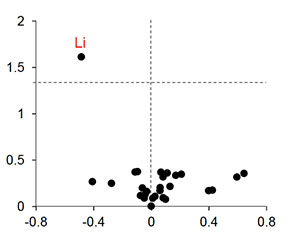
The observation aligned with previous population studies showing that higher lithium levels in the environment, including in drinking water, tracked with lower rates of dementia.
But the new study went beyond by directly observing lithium in the brains of people who hadn’t received lithium as a treatment, establishing a range that constitutes normal levels, and demonstrating that lithium plays an essential role in brain physiology.
“Lithium turns out to be like other nutrients we get from the environment, such as iron and vitamin C,” Yankner said. “It’s the first time anyone’s shown that lithium exists at a natural level that’s biologically meaningful without giving it as a drug.”
Then Yankner and colleagues took things a step further. They demonstrated in mice that lithium depletion isn’t merely linked to Alzheimer’s disease — it helps drive it.
Loss of lithium causes the range of Alzheimer’s-related changes
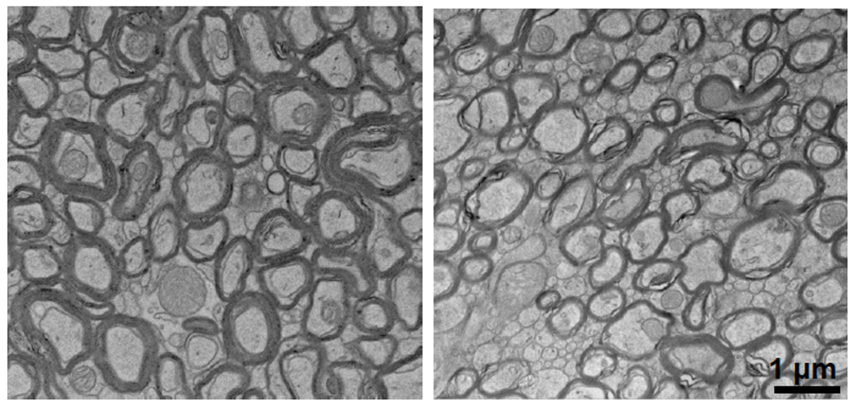
The researchers found that feeding healthy mice a lithium-restricted diet brought their brain lithium levels down to a level similar to that in patients with Alzheimer’s disease. This appeared to accelerate the aging process, giving rise to brain inflammation, loss of synaptic connections between neurons, and cognitive decline.
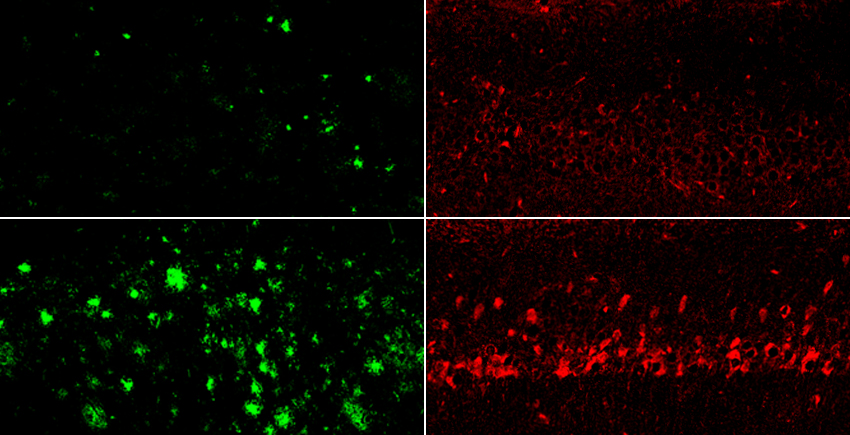
In Alzheimer’s mouse models, depleted lithium dramatically accelerated the formation of amyloid-beta plaques and structures that resemble neurofibrillary tangles. Lithium depletion also activated inflammatory cells in the brain called microglia, impairing their ability to degrade amyloid; caused the loss of synapses, axons, and neuron-protecting myelin; and accelerated cognitive decline and memory loss — all hallmarks of Alzheimer’s disease.
The mouse experiments further revealed that lithium altered the activity of genes known to raise or lower risk of Alzheimer’s, including the most well-known, APOE.
Replenishing lithium by giving the mice lithium orotate in their water reversed the disease-related damage and restored memory function, even in older mice with advanced disease. Notably, maintaining stable lithium levels in early life prevented Alzheimer’s onset — a finding that confirmed that lithium fuels the disease process.
“What impresses me the most about lithium is the widespread effect it has on the various manifestations of Alzheimer’s. I really have not seen anything quite like it all my years of working on this disease,” said Yankner.
A promising avenue for Alzheimer’s treatment
A few limited clinical trials of lithium for Alzheimer’s disease have shown some efficacy, but the lithium compounds they used — such as the clinical standard, lithium carbonate — can be toxic to aging people at the high doses normally used in the clinic.
The new research explains why: Amyloid beta was sequestering these other lithium compounds before they could work. Yankner and colleagues found lithium orotate by developing a screening platform that searches a library of compounds for those that might bypass amyloid beta. Other researchers can now use the platform to seek additional amyloid-evading lithium compounds that might be even more effective.
“One of the most galvanizing findings for us was that there were profound effects at this exquisitely low dose,” Yankner said.
If replicated in further studies, the researchers say lithium screening through routine blood tests may one day offer a way to identify individuals at risk for Alzheimer’s who would benefit from treatment to prevent or delay disease onset.
Studying lithium levels in people who are resistant to Alzheimer’s as they age might help scientists establish a target level that they could help patients maintain to prevent onset of the disease, Yankner said.
Since lithium has not yet been shown to be safe or effective in protecting against neurodegeneration in humans, Yankner emphasizes that people should not take lithium compounds on their own. But he expressed cautious optimism that lithium orotate or a similar compound will move forward into clinical trials in the near future and could ultimately change the story of Alzheimer’s treatment.
“My hope is that lithium will do something more fundamental than anti-amyloid or anti-tau therapies, not just lessening but reversing cognitive decline and improving patients’ lives,” he said.
Continue at: https://hms.harvard.edu/news/could-lithium-explain-treat-alzheimers-disease
The text above is owned by the site above referred.
Here is only a small part of the article, for more please follow the link
Also see:

 Manostaxx – Industrial Management Consulting


