

Raw materials are foundational elements in manufacturing safe, high-quality, and efficacious biological products (1–3). The inherent complexity and sensitivity of biologics necessitate robust risk-management strategies across their development and manufacture (4). Raw-material risk assessments provide a structured framework to identify and control risks — such as variability, contamination, and instability (Figure 1) — that can influence the final product (1, 5). By systematically evaluating raw-material criticality, biomanufacturers maintain compliance with regulatory standards, streamline production processes, and protect patient health (6, 7).
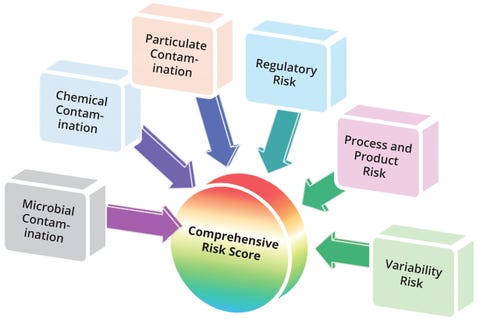
Figure 1: Comprehensive raw-materials risk assessment.
Here we explore the objectives and significance of material risk assessments, classify raw materials by risk profile, and investigate critical risk categories, including microbial contamination and stability. We present a comprehensive risk-scoring system and propose control measures tailored to moderate- and high-risk materials, highlighting the importance of proactive risk management throughout biopharmaceutical manufacturing (1, 8).
The Purpose of Material Risk Assessment
Material risk assessments help companies systematically identify, evaluate, and mitigate risks associated with raw materials in biologics production (1). These assessments address variability, contamination, stability, and handling safety to ensure consistent product quality and efficacy. Raw materials have a direct impact on biological production, downstream processing, and final-product critical quality attributes (CQAs) (2, 3, 9). After identifying materials that carry a higher risk of contamination, degradation, or variability, biomanufacturers can implement controls to safeguard product quality and maintain patient safety (2, 9).
Comprehensive risk assessments also facilitate regulatory compliance with agencies such as the US Food and Drug Administration (FDA), the European Medicines Agency (EMA), and guidelines from the International Council for Harmonisation of Technical Requirements for Pharmaceuticals for Human Use (ICH). Furthermore, risk management helps to mitigate variability and microbial or viral contamination risks through appropriate controls (4, 10, 11).
Thorough assessments enable manufacturers to refine supplier qualification, material handling, and monitoring strategies, ensuring that materials meet required specifications consistently (5, 12–14). Such a proactive approach reduces disruptions, costs, batch failures, and recalls (6). Repeated evaluations supply valuable data that support continuous improvement in manufacturing processes, supplier relationships, and overall quality management (7, 15). Thus, material risk assessments are vital to ensuring the safe, effective, and compliant production of biologics (8).
Classification of Raw-Material Risks
Effective classification of raw materials is essential for maintaining biologics quality, safety, and efficacy. According to chapter <1043> of the US Pharmacopeia and National Formulary — and as summarized in Table 1 and Figure 2 — raw materials are categorized based on their contamination potential, variability, and impurities (9, 16). By assigning materials to specific tiers (1–4, in this case), biomanufacturers can apply targeted control strategies aligned with each material’s risk profile, thereby enhancing the robustness of each manufacturing process.

Table 1: Raw-materials risk-classification tiers; WFI = water for injection.
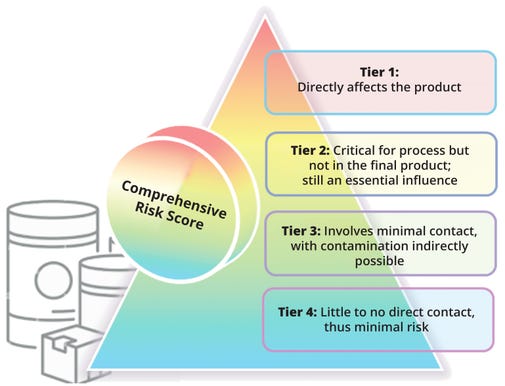
Figure 2: Tier classification of raw-materials risk according to USP <1043>.
Common Risk Attributes Across USP <1043> Tiers
Despite tier-defined differences, all raw materials share certain key risk attributes, including contamination potential, product and process effects, the need for testing and validation, and supplier reliability (9, 16). Addressing those attributes consistently will ensure a robust, compliant production environment that upholds biologics quality.
Contamination Risk: Whether biological, chemical, or particulate, contamination risk can compromise both product quality and patient safety (4, 10, 14, 17). Biomanufacturers can use a risk-scoring matrix to evaluate contamination risks from 1 (low) to 5 (high) based on sterility, impurity profiles, and handling/storage conditions. Certificates of analysis (CoAs) verify compliance with quality specifications (2, 3, 9).
Biological Contamination: The risk of biological contamination can be assessed by examining microbial loads, endotoxin levels, and viral contaminants (Table 2). Materials that are susceptible to microbial growth demand stricter controls than others require (8, 10, 11).
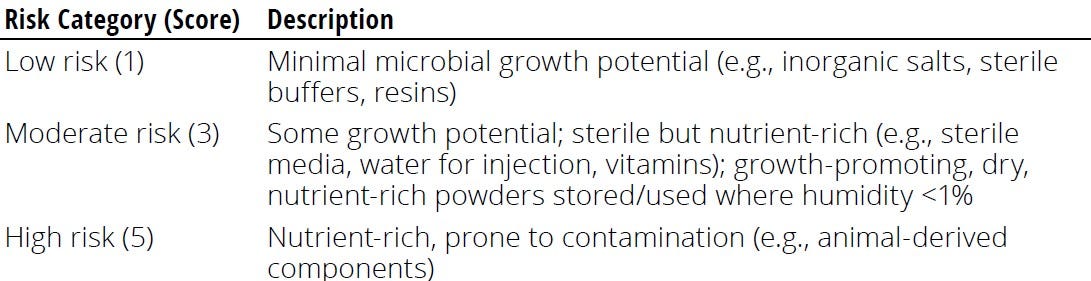
Table 2: Biological contamination risk assessment and scoring.
Chemical Contamination: Material purity, as confirmed by CoAs and adherence to ICH Q3C and Q3D guidelines, ensures minimal presence of chemical impurities (12–14, 18). Residual solvents, heavy metals, and by-products must be controlled rigorously. Table 3 provides risk-scoring guidance for chemical contamination.
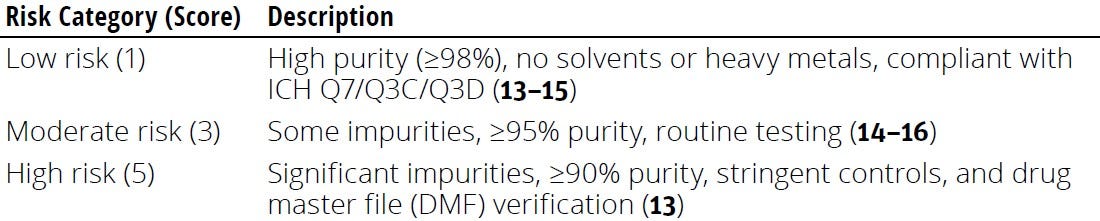
Table 3: Chemical contamination risk assessment and scoring.
Particulate Contamination: Risk scoring and control for particulates involves sterile filtration (0.2 µm), ISO class 5 cleanrooms, and USP <788> compliance (17–19), as summarized in Table 4.
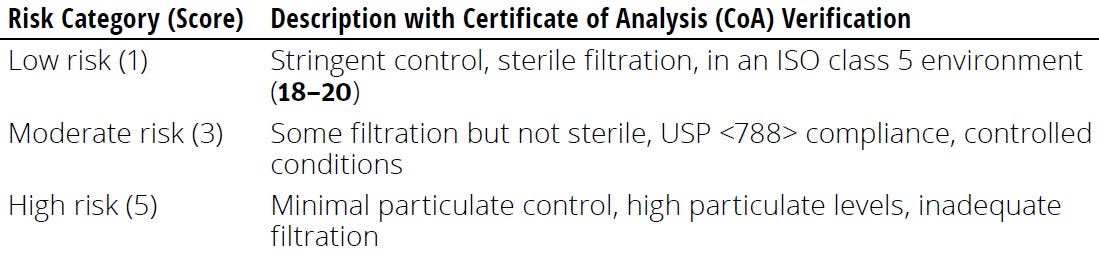
Table 4: Particulate contamination risk assessment and scoring.
Product and Process Risk (PPR): Raw materials can influence overall process performance as well as CQAs related to safety, potency, and stability (1, 20). Directly incorporated materials pose higher risks; however, indirect materials still can affect yield, equipment performance, and/or process reproducibility (20, 21). Table 5 provides PPR scoring guidance.

Table 5: Product and process risk assessment and scoring; CQA = critical quality attribute.
Regulatory Compliance Risk (RCR): Compliance with good manufacturing practices (GMP) and other regulatory requirements ensures that raw materials meet standards set by agencies and compendia. Using compendial-grade materials and those supported by drug master files (DMFs) lowers regulatory risks. Materials that lack such supports heighten the compliance burden of companies that use them (3, 9, 21–23). Table 6 summarizes risk scoring for RCR.

Table 6: Regulatory and compliance risk assessment and scoring.
Variability Control Risk (VCR): Material complexity, compendial status, animal origin, and documentation (e.g., COAs and DMFs) all can affect variability (5, 12, 13, 20). Relatively simple and well-characterized materials with robust documentation carry lower risk of variability. Table 7 lists risk scoring for VCR.
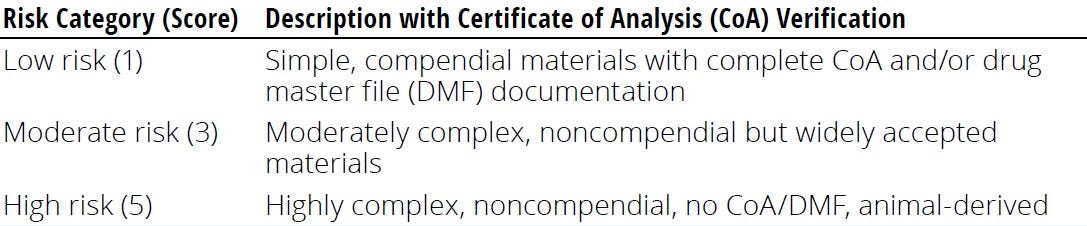
Table 7: Variety control risk assessment and scoring.
Comprehensive Overall Risk-Score Calculation: The weighted scoring system for raw materials integrates four key factors (1, 2, 20): contamination risk (30%); product and process impact (30%); testing, validation, and variability control (25%); and regulatory compliance (20%). Each factor is scored from 1 to 3 (Table 8), and the resulting weighted scores yield a final weighted risk score (WRS) calculated with Equation 1: WRSTotal = (w1 × RS1) + (w2 × RS2) + . . . + (wn × RSn).
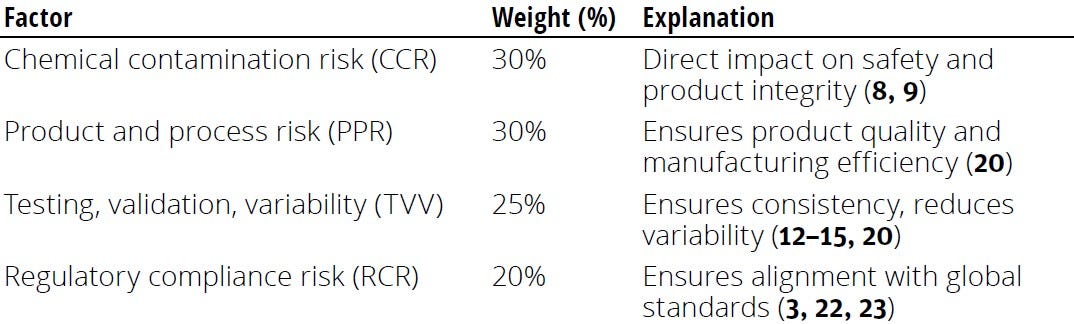
Table 8: Weight assignment for risk categories.
Controls for Moderate and High-Risk Materials
After calculating a comprehensive risk score as above, biomanufacturers can apply appropriate control measures that address the dominant risk factors — whether those are microbial, chemical, particulate, regulatory, product and process, or variability related. For materials categorized as Tier 2, such measures often involve enhanced monitoring protocols and minor process adjustments. By contrast, Tier 1 materials demand more stringent interventions (Table 9), including complete containment, continuous real-time monitoring, and thorough testing (1, 5). And for risks classified as Tier 3 and Tier 4, standard monitoring and controls remain adequate without significant modifications to current procedures.
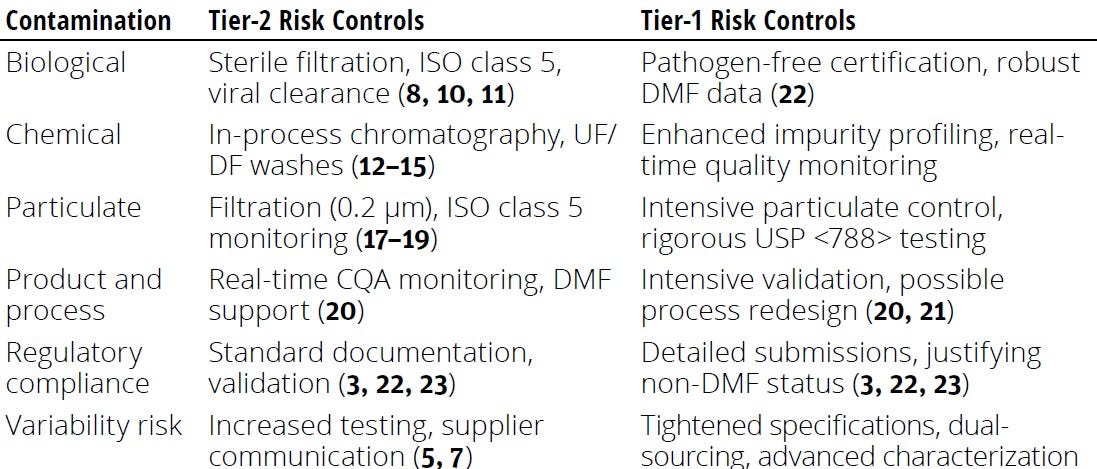
Table 9: Controls for moderate and high-risk materials; CQA = critical quality attributes, DMF = drug master file, UF/DF = ultrafiltration/diafiltration.
A Foundation for Quality
Material risk assessments are integral to biopharmaceutical manufacturing, for which they enable proactive identification and mitigation of critical risks. By addressing contamination, variability, product and process impacts, and regulatory compliance, manufacturers can maintain stable product quality and ensure patient safety (1, 7, 8). Combining the comprehensive risk scoring system described herein with tailored control measures supports continuous improvement to form a robust foundation for high-quality biologics production (4–6, 9).
References
1 ICH Q9(R1). Quality Risk Management. International Council for Harmonisation of Technical Requirements for Pharmaceuticals for Human Use: Geneva, Switzerland, 2023; https://www.ema.europa.eu/en/documents/scientific-guideline/international-conference-harmonisation-technical-requirements-registration-pharmaceuticals-human-use-ich-guideline-q9-r1-quality-risk-management-step-5-revision-1_en.pdf.
2 ICH Q7. Good Manufacturing Practice Guide for Active Pharmaceutical Ingredients. International Council for Harmonisation of Technical Requirements for Pharmaceuticals for Human Use: Geneva, Switzerland, 2000; https://database.ich.org/sites/default/files/Q7%20Guideline.pdf.
3 Guidance for Industry: Process Validation: General Principles and Practices. US Food and Drug Administration: Silver Spring, MD, 2011; https://www.fda.gov/files/drugs/published/Process-Validation–General-Principles-and-Practices.pdf.
4 EMA/CHMP/BWP /151897/2013. Guideline on the Quality of Biological Active Substances Produced by Transgene Expression in Animals. European Medicines Agency: Amsterdam, Netherlands, 2013; https://www.tga.gov.au/sites/default/files/2024-07/guidelineonqualityofbiologicalactivesubstancesproducedbytransgeneexpressioninanimalscurrent.pdf.
5 TR 822 (Annex 2). WHO Guidelines on Good Manufacturing Practices for Biological Products. World Health Organization: Geneva, Switzerland, 2016; https://www.who.int/docs/default-source/biologicals/gmp/annex-2-who-good-manufacturing-practices-for-biological-products.pdf.
6 Rathore AS, Winkle H. Quality by Design for Biopharmaceuticals. Nat. Biotechnol. 27(1) 2009: 26–34; https://doi.org/10.1038/nbt0109-26.
7 ISPE Baseline Guide, Volume 6: Biopharmaceutical Manufacturing Facilities. International Society for Pharmaceutical Engineering: North Bethesda, MD, 2023; https://ispe.org/publications/guidance-documents/baseline-guide-vol-6-biopharmaceutical-manufacturing-facilities-3rd-edition.
8 ICH Q5A(R1). Viral Safety Evaluation of Biotechnology Products Derived from Cell Lines of Human or Animal Origin. International Council for Harmonisation of Technical Requirements for Pharmaceuticals for Human Use: Geneva, Switzerland, 1999; https://database.ich.org/sites/default/files/Q5A%28R1%29%20Guideline_0.pdf.
9 Chapter <1043> Ancillary Materials for Cell, Gene, and Tissue-Engineered Products. USP–NF 2020; https://doi.org/10.31003/USP43-NF38_M620_02_01.
10 Guidance for Industry: Sterile Drug Products Produced by Aseptic Processing — Current Good Manufacturing Practice. US Food and Drug Administration: Silver Spring, MD, 2020: https://www.fda.gov/regulatory-information/search-fda-guidance-documents/sterile-drug-products-produced-aseptic-processing-current-good-manufacturing-practice.
11 Chapter <85> Bacterial Endotoxins Test. USP–NF 2020; https://doi.org/10.31003/USP41-NF36_M98830_02_01.
12 ICH Q3C(R8). Impurities: Guideline for Residual Solvents. International Council for Harmonisation of Technical Requirements for Pharmaceuticals for Human Use: Geneva, Switzerland, 2021; https://database.ich.org/sites/default/files/ICH_Q3C-R8_Guideline_Step4_2021_0422_1.pdf.
13 ICH Q3D(R2). Guideline for Elemental Impurities. International Council for Harmonisation of Technical Requirements for Pharmaceuticals for Human Use: Geneva, Switzerland, 2022; https://database.ich.org/sites/default/files/Q3D-R2_Guideline_Step4_2022_0308.pdf.
14 Guidance for Industry: ANDAs: Impurities in Drug Substances. US Food and Drug Administration: Silver Spring, MD, 2009: https://www.fda.gov/media/183885/download.
15 CBER/CDER. Guidance for Industry: Container Closure Systems for Packaging Human Drugs and Biologics. US Food and Drug Administration: Silver Spring, MD, 1999; https://www.fda.gov/media/70788/download.
16 Chapter <788>. Particulate Matter in Injections. USP–NF 2020; https://doi.org/10.31003/USP41-NF36_M99586_02_01.
17 Ph. Eur. Chapter 2.9.19. Particulate Contamination: Sub-Visible Particles. European Pharmacopoeia, 11th ed., 2021; https://pharmeuropa.edqm.eu.
18 ISO 14644-1:2015. Cleanrooms and Associated Controlled Environments — Part 1: Classification of Air Cleanliness by Particle Concentration. International Organization for Standardization: Geneva, Switzerland, 2015; https://www.iso.org/standard/53394.html.
19 ICH Q8(R2). Pharmaceutical Development. International Council for Harmonisation of Technical Requirements for Pharmaceuticals for Human Use: Geneva, Switzerland, 2009; https://database.ich.org/sites/default/files/Q8_R2_Guideline.pdf.
20 Guidance for Industry: Drug Master Files. US Food and Drug Administration: Silver Spring, MD, 2019; https://www.fda.gov/media/131861/download.
21 Rathore AS. Roadmap for Implementation of Quality by Design (QbD) for Biotechnology Products. Trends Biotechnol. 27(9) 2009: 546–553; https://doi.org/10.1016/j.tibtech.2009.06.006.
22 EMA/CHMP/BWP/534898/2008. Guideline on the Requirements for Quality Documentation Concerning Biological Investigational Medicinal Products in Clinical Trials. European Medicines Agency: Amsterdam, Netherlands, 2008; https://www.ema.europa.eu/en/documents/scientific-guideline/guideline-requirements-quality-documentation-concerning-biological-investigational-medicinal-products-clinical-trials-revision-1_en.pdf.
23 Regulatory Procedures Manual. US Food and Drug Administration: Silver Spring, MD, 2024; https://www.fda.gov/inspections-compliance-enforcement-and-criminal-investigations/compliance-manuals/regulatory-procedures-manual.
The text above is owned by the site above referred.
Here is only a small part of the article, for more please follow the link
Also see:

 Manostaxx – Industrial Management Consulting


