

Researchers recently discovered that eight different psychiatric conditions share a common genetic basis.
A study published this year pinpointed specific variants among those shared genes and uncovered how they behave during brain development.
This may explain why these conditions often co-occur – for example up to 70 percent of individuals diagnosed with autism or ADHD have the other too – and why they frequently cluster in families.
Each of these eight conditions also has gene differences that are unique to them individually, so Won and team compared the unique genes with those shared between the disorders.
They took almost 18,000 variations of the shared and unique genes involved and put them into the precursor cells that become our neurons to see how they could impact gene expression in these cells during human development.
This allowed the researchers to identify 683 genetic variants that impacted gene regulation and to further explore them in neurons from developing mice.
Genetic variants behind multiple seemingly unrelated traits, or in this case conditions, are called pleiotropic. The pleiotropic variants were involved in many more protein-to-protein interactions than the gene variants unique to specific psychological conditions, and they were active across more types of brain cells.
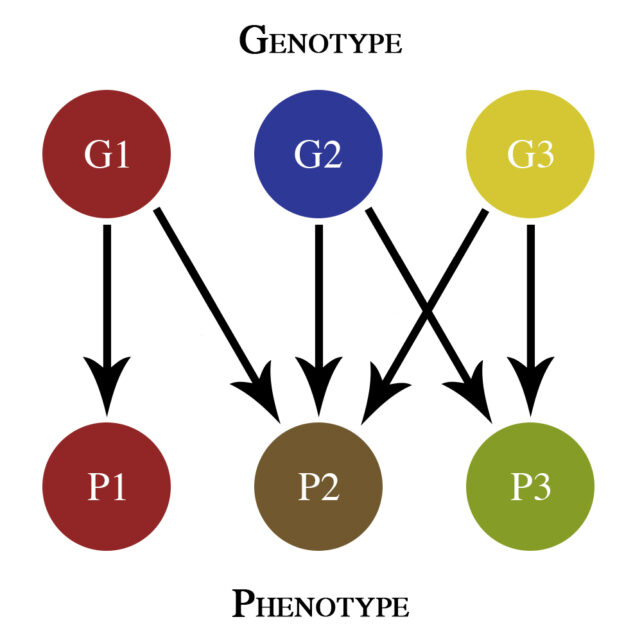
This simple genotype-phenotype map only shows additive pleiotropy effects. G1, G2, and G3 are different genes that contribute to phenotypic traits P1, P2, and P3. (Alphillips6/CC BY-SA 4.0/Wikimedia Commons)
Pleiotropic variants were also involved in regulatory mechanisms that impact multiple stages of brain development. The ability of these genes to impact cascades and networks of processes, such as gene regulation, could explain why the same variants can contribute to different conditions.
“Pleiotropy was traditionally viewed as a challenge because it complicates the classification of psychiatric disorders,” says Won.
“However, if we can understand the genetic basis of pleiotropy, it might allow us to develop treatments targeting these shared genetic factors, which could then help treat multiple psychiatric disorders with a common therapy.”
This would be a very useful strategy given the World Health Organization estimates 1 in 8 people (almost 1 billion in total) live with some form of psychiatric condition.
Continue at: https://www.sciencealert.com/several-psychiatric-disorders-share-the-same-root-cause-study-finds
The text above is owned by the site above referred.
Here is only a small part of the article, for more please follow the link
Also see:

 Manostaxx – Industrial Management Consulting


